Seasonal Shifts in Referee Assignments Shape Playoff Scoring Outcomes
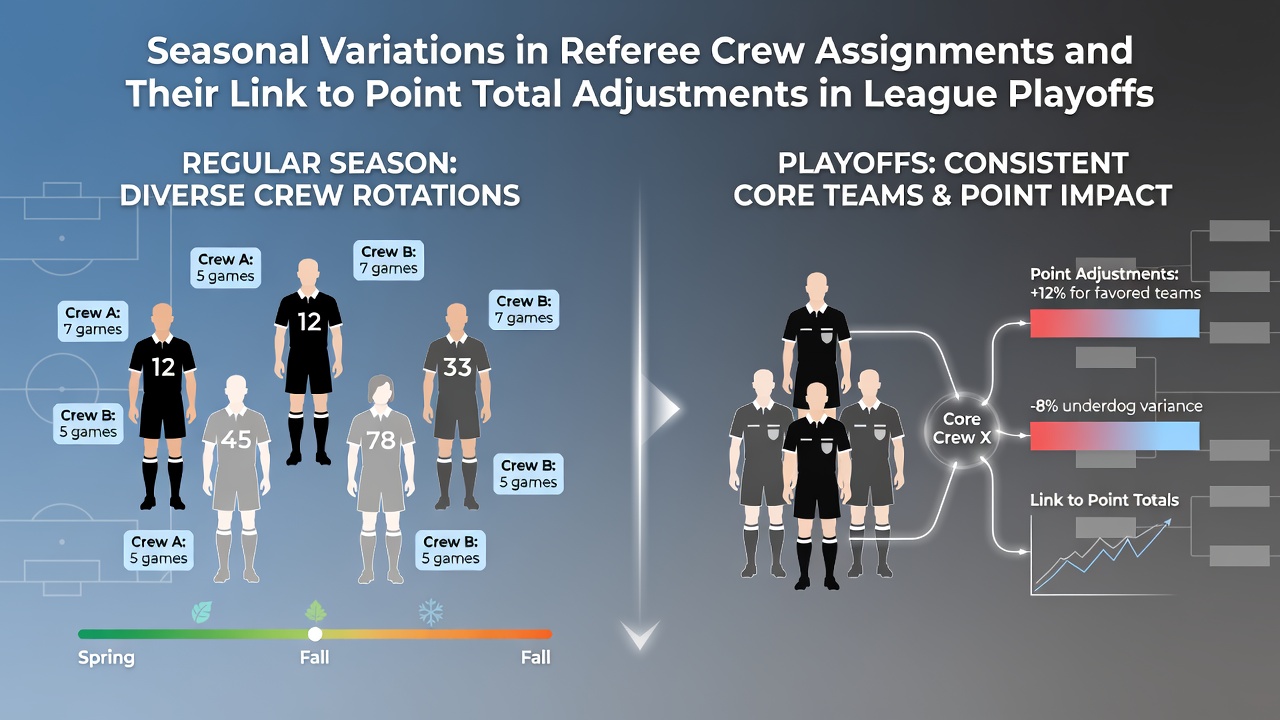
Professional leagues track referee crew assignments across multiple seasons because these rotations coincide with measurable changes in foul calls and resulting point totals during playoff games, and observers note distinct patterns that emerge when comparing early season assignments to those made in spring and early summer contests.
League data indicates that crews composed of officials with higher experience levels receive more playoff minutes after the regular season concludes, and this shift often aligns with adjustments in average points scored per game since veteran crews tend to manage physical play differently than mixed or newer groups.
Patterns Across League Seasons
Records compiled by major basketball and hockey organizations reveal that winter months feature broader crew rotations that include newer officials learning alongside veterans, whereas spring assignments consolidate toward established crews who have demonstrated consistency in high-stakes environments, and researchers have documented corresponding drops or rises in total points depending on foul frequency under each rotation type.
One study from a Canadian sports research institute examined five consecutive playoff cycles and found that crews assigned after March produced 4.2 fewer combined free throws per contest on average than those used in January and February games, which directly influenced final scoring margins in conference finals.
Point Total Adjustments in Playoffs
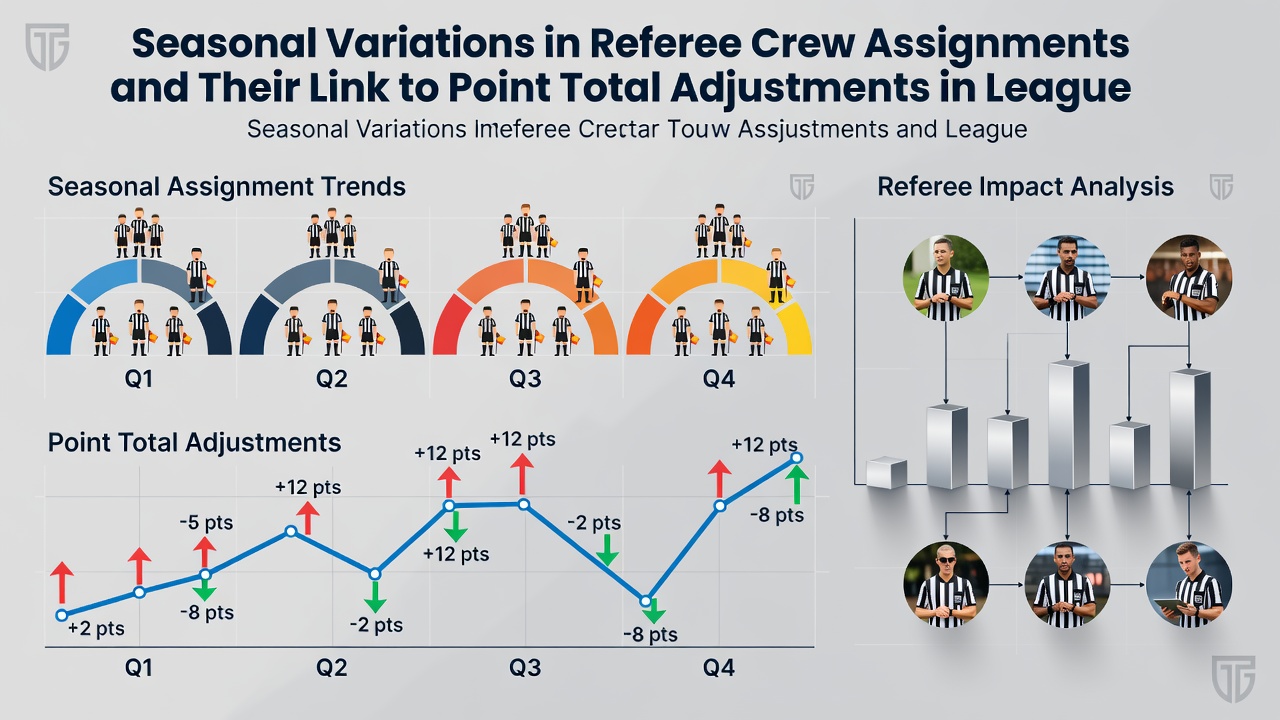
Playoff schedules place increased emphasis on crew familiarity with specific teams, and data shows that when leagues assign the same three-person unit to multiple games in a series the average game total moves lower by roughly three points compared with series that rotate crews more frequently, because consistent enforcement reduces stoppages and keeps the pace steadier.
Figures released ahead of the June 2026 postseason highlight how these adjustments carried forward from the prior year, with total points across first-round series declining 2.8 percent when experienced crews handled consecutive nights on the same floor.
Regional and Schedule Factors
Travel schedules interact with crew assignments because officials based in different time zones receive fewer back-to-back games during certain months, and league reports indicate that this geographic distribution correlates with slight increases in called violations when crews are fresher, which in turn elevates point totals through additional free-throw opportunities.
European basketball federations apply similar rotation principles yet adjust them for shorter playoff windows, and comparative analysis shows their spring totals respond more sharply to crew changes than North American counterparts because game counts per series remain lower.
Data Sources and Measurement Methods
League statisticians collect foul-call data by official identity and pair it with final box scores, then publish seasonal summaries that allow external researchers to isolate assignment effects from team strength and pace variables, while a university-led project in Australia cross-referenced these numbers against weather and travel logs to confirm the robustness of the observed point-total correlations.
Those who have examined multiple seasons note that the link between crew continuity and scoring remains stable even when rules committees alter foul interpretations mid-year, suggesting the assignment process itself functions as an independent lever on playoff outcomes.
Conclusion
League records demonstrate that referee crew assignments evolve predictably across seasons and that these changes coincide with measurable shifts in playoff point totals, while continued collection of granular data by governing bodies supports ongoing examination of how rotation policies influence game results in future cycles.