How Player Injuries Prompt Real-Time Shifts in Basketball Totals on Mobile Apps
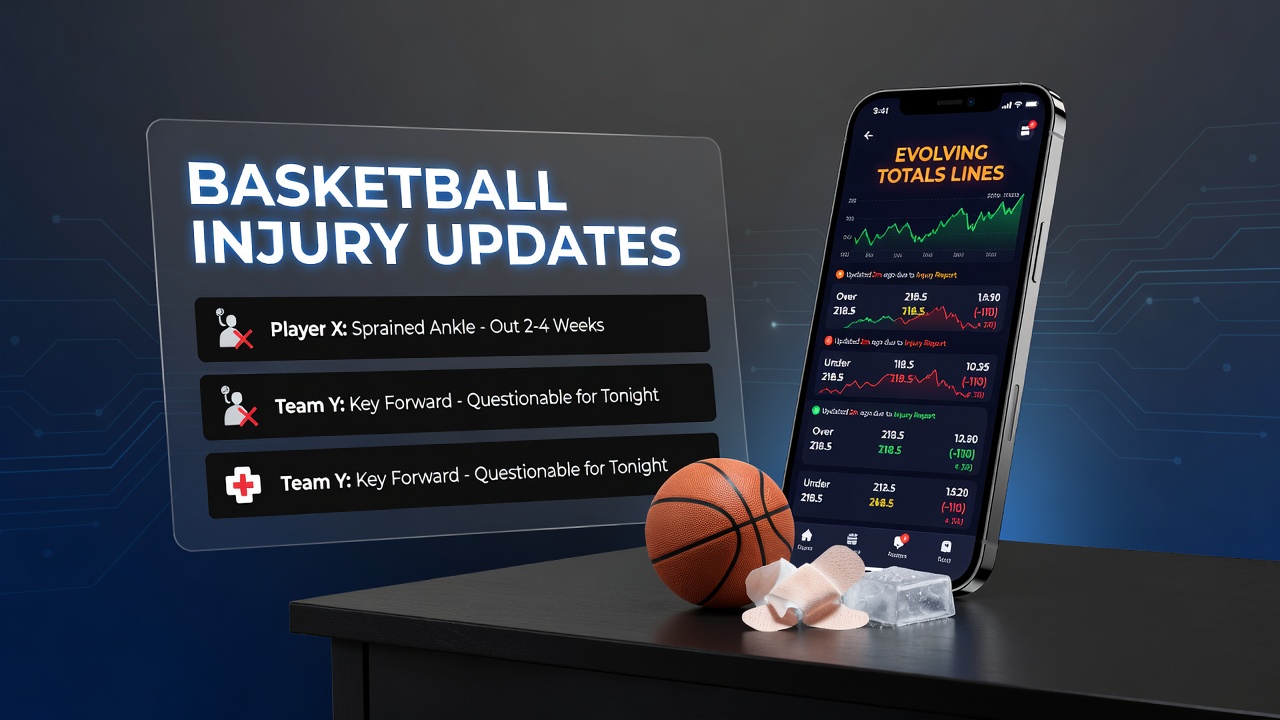
Observers note that basketball injury reports reach mobile platforms within minutes of official announcements, and this speed directly alters projected point totals before tip-off or during early quarters. Data from recent seasons shows that a starting center's absence often drops the projected total by 4 to 7 points while bookmakers recalibrate algorithms to reflect reduced rebounding and interior scoring opportunities. Mobile applications integrate these updates through automated feeds that pull from team medical staff releases and league notifications, which keeps odds fluid across user sessions.
Tracking Injury Data Across Professional Leagues
Teams release injury reports at set intervals mandated by league rules, and analysts compile these into statistical models that feed directly into mobile betting interfaces. A power forward's ankle sprain announced on a Tuesday morning, for instance, triggers immediate line movement on that evening's game totals, while backup rotation adjustments receive secondary weighting in the same calculations. Researchers at sports analytics firms have documented that games missing multiple rotation players see totals lines move an average of 6.2 points from the initial release, with the largest shifts occurring in the final two hours before game time.
What's interesting is how mobile developers structure these feeds to prioritize high-impact positions such as point guards and centers, whose absences affect both offensive efficiency and defensive schemes more than wing injuries do. Users who monitor live injury scrolls within the app often see totals adjust in real time as new status changes appear, and this transparency stems from partnerships between betting operators and data providers who aggregate official league sources.
Algorithmic Responses in Mobile Environments
Algorithms employed by mobile platforms weigh player efficiency ratings against historical team performance without the injured athlete, then recalculate projected possessions and points per possession. When a team's leading scorer sits out, the system lowers the over/under threshold while simultaneously monitoring betting volume to prevent excessive liability on one side of the line. These adjustments occur continuously because mobile users place wagers at all hours, requiring lines to reflect the latest roster information rather than static pre-game projections.
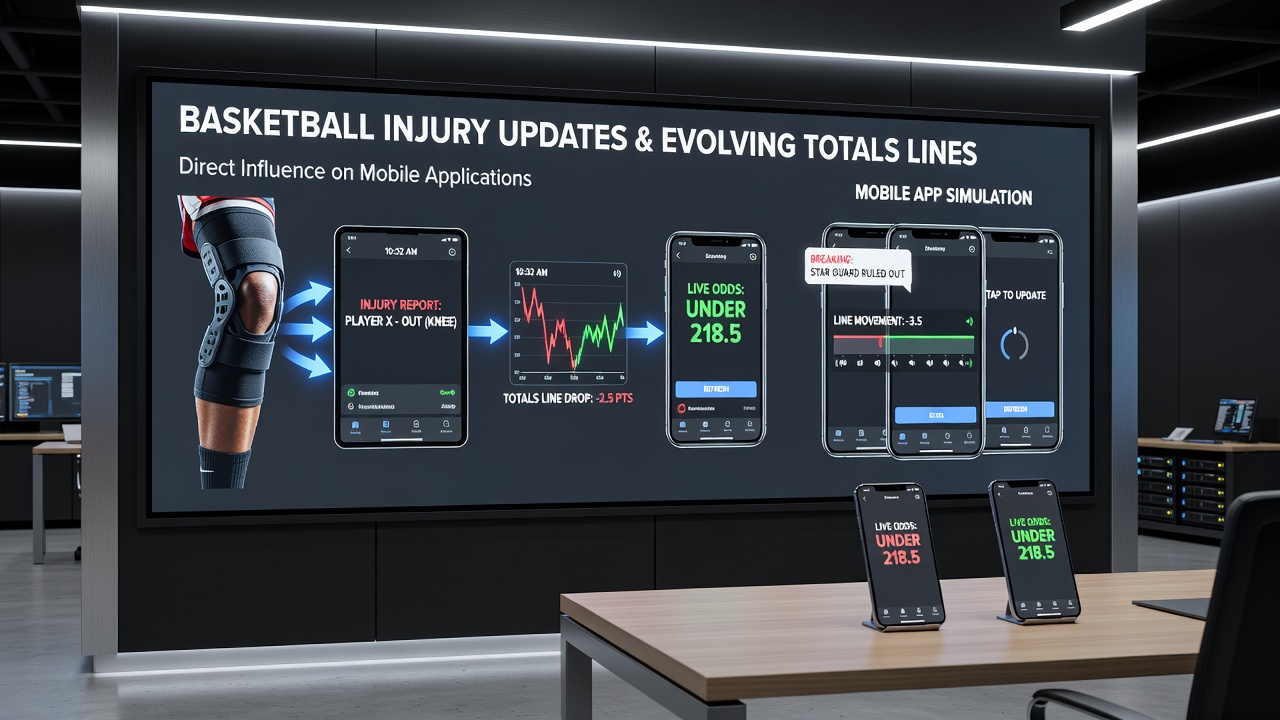
July 2026 summer league contests have already demonstrated similar patterns, where prospect injuries during showcase games caused quick downward revisions to expected scoring outputs on several mobile books. Observers tracking these events report that the same data pipelines used for regular-season games apply to exhibition matchups, allowing operators to maintain consistent risk-management protocols year-round. Studies from academic institutions examining betting market efficiency confirm that injury-driven line movements reduce discrepancies between opening and closing totals more rapidly in mobile environments than in traditional retail settings.
Impact on User Behavior and Platform Features
Mobile applications now include notification toggles that alert users when a key injury update crosses the wire, prompting many to revisit previously placed totals wagers or explore adjusted live lines. Those who study historical data discover that totals involving teams with frequent injury reports tend to close lower than consensus projections because reduced rotation depth limits scoring bursts in the fourth quarter. Platform operators respond by offering injury-specific filters that let users sort games by expected line volatility, a feature rolled out across several major apps in early 2026.
According to figures released by the American Gaming Association, mobile sports wagering accounted for over 80 percent of total handle in regulated markets during the first half of 2026, which places added pressure on operators to deliver accurate and timely totals adjustments. This volume increase coincides with expanded use of real-time injury APIs that connect directly to league databases, minimizing lag between announcement and line movement.
Regional Regulatory Context and Data Standards
Regulators in multiple jurisdictions require operators to document how external data sources influence line changes, and this oversight extends to injury feeds used for totals pricing. In Canada, provincial gaming authorities have examined the correlation between verified injury reports and subsequent market movements, finding that transparent sourcing reduces disputes over line integrity. Australian regulatory bodies similarly track how mobile platforms handle roster changes during international competitions that feature NBA players, ensuring that totals lines reflect accurate availability information across time zones.
Those who've examined these frameworks note that standardized data formats now allow injury details to propagate across borders without manual intervention, which accelerates the entire adjustment process. Mobile apps therefore display updated totals alongside the original line and the time stamp of the triggering injury report, giving users a clear audit trail for each movement.
Conclusion
Basketball injury updates continue to serve as primary drivers of totals line evolution within mobile applications because they alter the underlying statistical inputs that determine projected scoring. As data integration improves and regulatory standards evolve, platforms maintain tighter alignment between roster realities and displayed odds, while users gain access to more granular information about the factors shaping each line. This ongoing connection between medical announcements and betting markets reflects broader trends in how live data shapes wagering products across professional basketball.