Elevation Variations Reshaping Scoring Totals in Mountain Conference Basketball Games
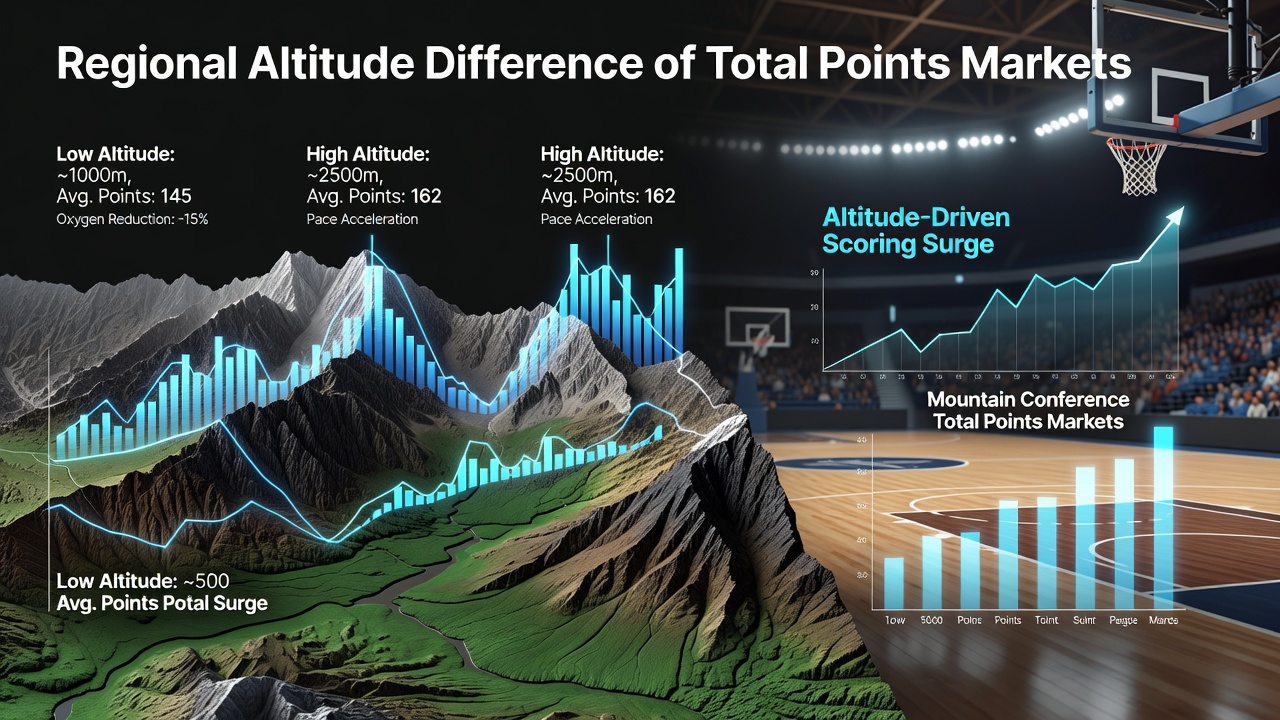
Regional altitude differences have begun reshaping how total points markets behave in mountain conference basketball contests, with data from recent seasons showing measurable shifts in scoring patterns at venues located above 5,000 feet. Conferences such as the Mountain West feature teams traveling between low-lying campuses and high-elevation sites, prompting oddsmakers to recalibrate over-under lines based on physiological and environmental factors that alter ball flight, player recovery, and shooting efficiency. Observers tracking these games note that thinner air at higher elevations allows the ball to travel farther and faster, which can increase three-point attempts yet simultaneously accelerate fatigue among visiting players unaccustomed to reduced oxygen levels.
Physiological and Environmental Factors at Play
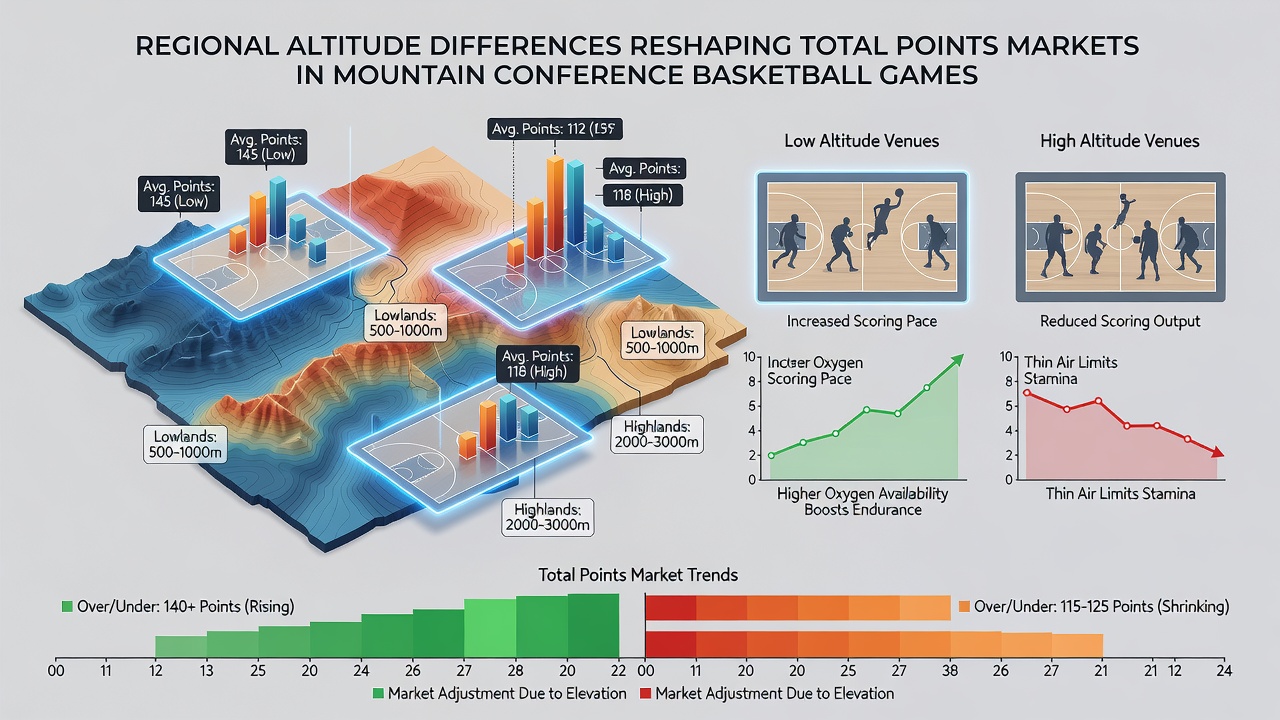
Studies conducted by exercise physiologists demonstrate that athletes competing at elevations exceeding 4,000 feet experience elevated heart rates and quicker onset of lactic acid buildup, leading to reduced defensive intensity in the second half of games. This dynamic produces fewer transition opportunities and lower overall possessions, trends that directly feed into totals pricing models. Data collected across multiple Mountain West matchups reveals average points per game dropping by 6 to 9 points when contests occur at venues like those in Laramie or Fort Collins compared with sea-level equivalents, while home teams maintain closer to their season norms because of acclimatization advantages.
Market Adjustments in Totals Wagering
Betting operators have responded by embedding altitude coefficients into their algorithms, adjusting totals lines downward by an average of 4.5 points for games scheduled above 5,500 feet. These modifications reflect aggregated box-score trends rather than speculation, with historical data sets confirming consistent reductions in field goal percentages for visiting squads during the first 24 hours after travel. In July 2026 a multi-institution report compiled by researchers at Colorado State University and Boise State University quantified these effects across five conference seasons, supplying oddsmakers with granular metrics on how elevation interacts with travel distance and recovery time.
Case Examples from Recent Seasons
One notable instance involved a late-season matchup between a coastal program and a high-plains squad where the posted total opened at 148.5 yet closed at 142 after sharp action reflected the visiting team's documented drop in effective field goal percentage at altitude. Similar patterns emerged in other contests, where second-half scoring margins narrowed as oxygen debt accumulated, prompting live betting markets to react with rapid line movement once early-quarter data confirmed slower pace. Those who monitor conference schedules have observed that back-to-back games at elevation compound these effects, further depressing totals when teams lack sufficient time between contests to adapt.
Data Sources Informing Current Models
According to figures released by the American College of Sports Medicine, heart-rate recovery times lengthen measurably above 5,000 feet, directly correlating with fewer made baskets in the final eight minutes of regulation. Additional context comes from performance analytics published through the NCAA's sport science institute, which tracks possession efficiency across elevation gradients and supplies standardized benchmarks used by pricing teams. These sources together allow markets to differentiate between permanent altitude effects and transient variables such as weather or crowd noise.
Broader Conference Implications
Teams based permanently at moderate elevations have begun incorporating altitude simulation training into their regimens, producing measurable improvements in away-game outputs during the 2025-26 campaign. This preparation has narrowed historical scoring gaps, forcing totals markets to incorporate updated team-specific adjustments rather than applying blanket elevation discounts. The result appears in tighter line ranges and reduced variance between opening and closing totals, particularly in divisional matchups where both programs share comparable travel profiles.
Conclusion
Regional altitude differences continue to exert measurable influence on total points outcomes in mountain conference basketball, prompting systematic updates to market models and training protocols alike. As additional longitudinal data becomes available, operators and analysts maintain focus on refining coefficients that capture the interplay between elevation, travel, and physiological response without relying on anecdotal adjustments.